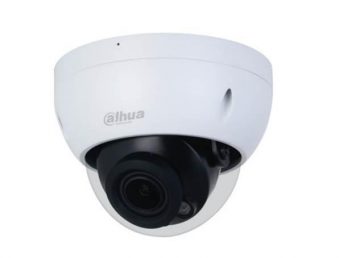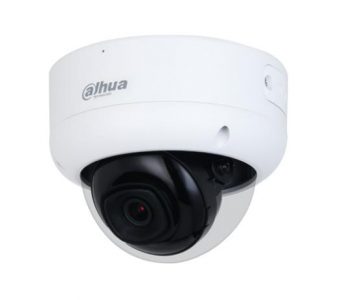

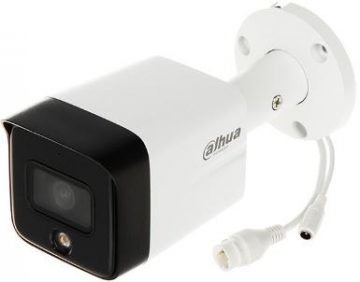
DAHUA IP CAMERA IPC-HFW1639TC-A-IL-0360B-S6
.
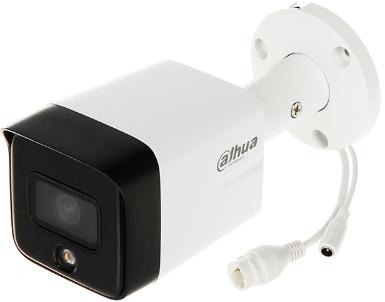
Main parameters:
The IP camera is equipped with an advanced H.264 image compression algorithm. / H.265 provides clear and smooth video transmission with a maximum resolution of 6 MPx.
The advanced dual light technology, Smart Dual Light, allows the user to choose between white light and infrared light (IR) mode. In Smart Dual Light mode, the white light automatically turns on when an object is detected in the observation area, which significantly improves image quality.
PoE power support according to the 802.3af standard increases the versatility of the device and simplifies its installation.
IP technology
IP (Internet Protocol) system is a digital high-definition image transmission technology. The use of IP technology in video surveillance has made it possible to achieve high image resolution, such as Full HD or 4K resolution. An additional advantage provided by IP technology is the transmission of electricity (POE standard) over the same cable through which the video signal, i.e. data, is transmitted. IP surveillance systems are designed for the most demanding users.
Technical Specification:
| Standard: | IP | Resolution: | 3200 x 1800 – 6Mpx, , | 2880 x 1620 – 4.7Mpx, , |
| 2688 x 1520 – 4Mpx, | |||
| 2048 x 1536 – 3Mpx, , | |||
| 2304 x 1296 – 3Mpx, | |||
| 1280 x 960 – 1.3Mpx, | |||
| 1280x720 – 720p | |||
| Processor: | 1/2.7″ progressive scan CMOS | ||
| Jumper: | 3.6 mm | ||
| Viewing angle: | 91° | ||
| Irumu emitter range: | 30 m | ||
| White light (LED) emitter range: | 30m | ||
| Signal to noise ratio (S/N): | >56dB | ||
| Consumption: 50 dB | |||
| Memory card slot: | no | ||
| Image compression method: | H.265+ / H.265 / H.264+ / H.264 / MJPEG | ||
| Alarm inputs/outputs: | no | ||
| Audio: | Built-in microphone | ||
| Network audio transmission | |||
| Audio detection | |||
| Mainstream data rate: | 20 frames per second @ 6Mpx | ||
| 25 frames per second @ 4Mpx | |||
| Network interface: | 10/100 Base-T (RJ-45) | ||
| WEB server: | Built-in | Max. Number of online users: | 6 |
| ONVIF: | yes | ||
| Mobile access: | Port: Phone: 37777 or access via cloud (P2P) | ||
| Android: Free DMSS app | |||
| iOS (iPhone): Free DMSS app | |||
| From the default IP address: | 192.168.1.108 | ||
| Default administrator username/password: | admin / – | ||
| .Administrator password must be set during first startup | |||
| Web access ports: | 80, 37777 | ||
| Ports for access via PC application: | 37777 | ||
| Access ports via mobile app: | 37777 | ||
| ONVIF port: | 80 | ||
| RTSP URL: | rtsp://admin:hasło@192.168.1.108:554/cam/realmonitor?channel=1&subtype=0 – Main Stream | ||
| Intelligent image analysis: | Selected features: | Selected features: | When the intelligent dual light is activated, the white light automatically turns on only when an object is detected in the observed area, effectively improving image quality |
| D-WDR – wide dynamic range of lighting | |||
| ./td> | 3D-DNR – digital noise reduction in video | .ROI – enhancing selected parts of an image | |
| .BLC/HLC – Backlight/Highlight Compensation | |||
| Adjustable resolution, quality and bandwidth | |||
| Motion detection – max. 4 configurable zones | Privacy zones – max. 4 | PoE (802.3af), | |
| 12V DC / 330mA | |||
| Electricity consumption: | ≤ 4W @ 12V DC | ||
| ≤ 5.3W @ PoE | |||
| Body kit: | Compact – metal | ||
| Colour: | White + black | ||
| Tension class: | IP67 | ||
| Mechanical protection class: | no | ||
| Operating temperature: | -40°C … 60°C | ||
| Weight: | 0..44kg | ||
| Dimensions: | 173 x 70 x 70 mm | ||
| Supported languages: | Latvian, Polish, English, Czech, French, Spanish, Dutch, German, Russian, Portuguese, Romanian, Turkish, Ukrainian, Hungarian, Italian | ||
| Manufacturer/brand: | DAHUA | ||
| Warranty: | 3 years |

Onvif 2.4
Onvif (Open Network Video Interface Forum) is an organization of manufacturers of video surveillance equipment, the goal of which is to unify a standard, common protocol for these devices. This group was created to unify the protocol, i.e. the way in which devices from different suppliers communicate. Currently, the organization has about 450 companies and institutions from all over the world. Since its introduction, the Onvif standard has gone through several stages of development and encountered various unforeseen problems. It happened that two different devices with the implemented protocol did not work or their functionality was limited. Today, the standard is offered in versions 2.0 and higher, which in most cases allows you to integrate any device without problems.